
Micro-Influencer Marketing Agreements in 2026: Protecting Your ROI and Scaling Partnerships

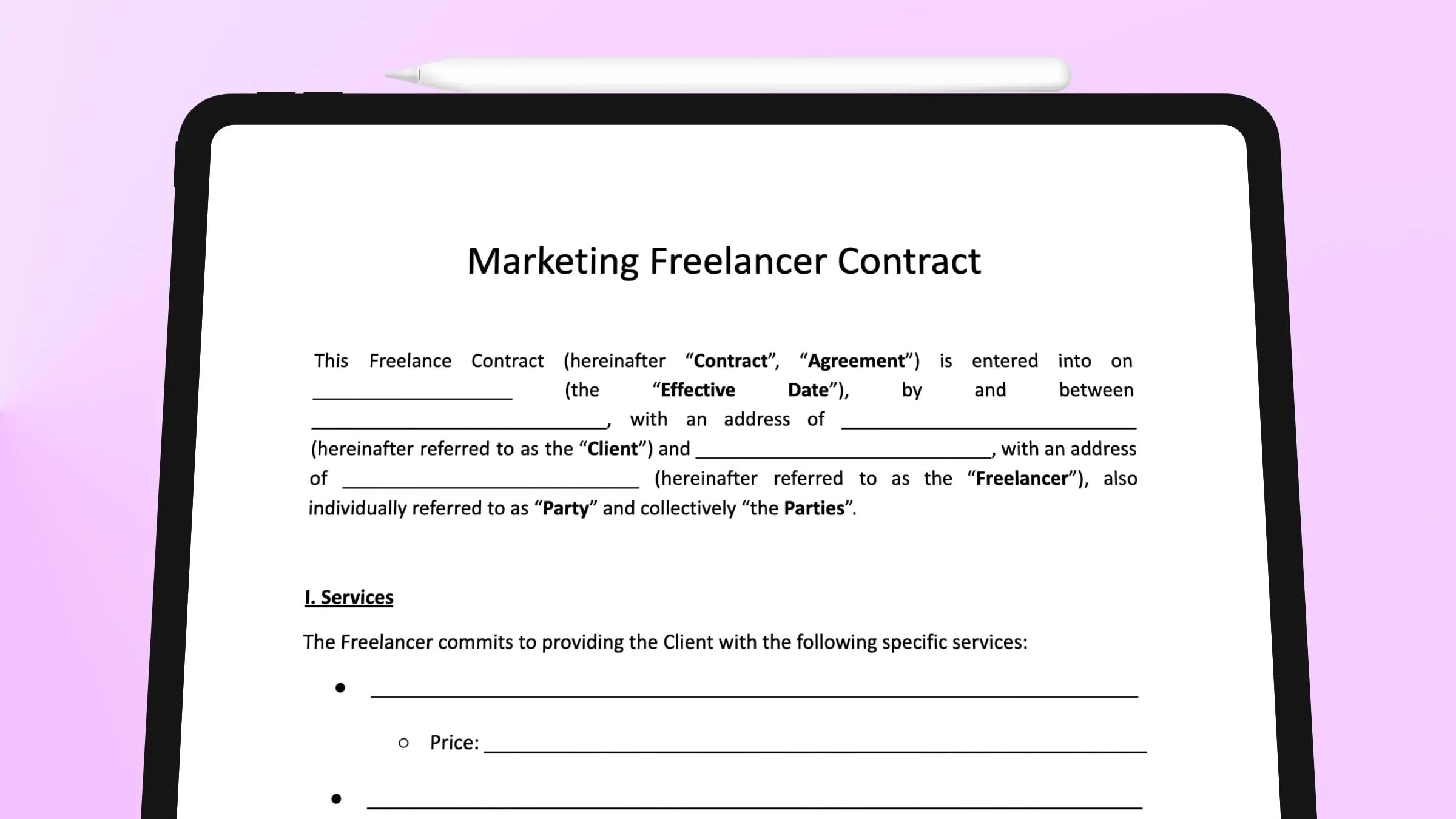
A handshake deal feels faster. Skip the contract, move straight to content creation, and worry about the details later.
Until something goes wrong.
The payment never arrives. The brand uses your content in ways you never agreed to. A campaign gets cancelled mid-way with no compensation. Disputes turn into legal nightmares.
In 2026, micro-influencer marketing has matured enough that both brands and creators understand: professional partnerships require professional agreements.
This isn't about creating adversarial relationships. Good contracts actually strengthen partnerships by setting clear expectations upfront. Both sides know exactly what success looks like.
Here's how to structure agreements that protect your ROI while building relationships that scale.
Why Written Agreements Matter More Than Ever
The micro-influencer industry has grown up. What was once informal arrangements between bloggers and small brands is now a multi-billion dollar marketing channel.
With that growth comes complexity.
Usage rights have exploded in value. Brands now routinely want to repurpose creator content for paid ads, email campaigns, and website content. A single Instagram story can end up in Facebook ads reaching millions. Without clear agreements, creators give away rights worth thousands of dollars.
Regulatory requirements have tightened. FTC disclosure requirements, platform-specific rules, and international regulations mean both parties need documented compliance. "I thought you were handling that" doesn't hold up with regulators.
Disputes are expensive. When deals go sideways without contracts, resolution becomes he-said-she-said. Legal fees eat into whatever was at stake. Relationships that could have become long-term partnerships end in bitterness.
Scale requires systems. Creators building real businesses can't track dozens of verbal agreements. Brands running multiple creator campaigns need standardized terms. Written agreements create the foundation for scale.
Essential Elements of Every Creator Agreement
Whether you're working with a major brand or a startup, certain elements belong in every partnership agreement.
Scope of Work
The most common source of disputes is mismatched expectations about deliverables.
Be specific about:
- Exact number of posts, stories, reels, or videos
- Platforms where content will be published
- Content format requirements (length, aspect ratio, quality standards)
- Key messages or talking points that must be included
- Prohibited content or competitors that cannot be mentioned
- Revision rounds included in the base fee
- Timeline for deliverables with specific dates
Vague terms like "several social posts" or "ongoing content support" create problems. "Three Instagram feed posts with minimum 60-second video, published on your main feed on dates mutually agreed, plus accompanying Stories on each post date" leaves no room for confusion.
Compensation Structure
Money conversations feel awkward. Written terms remove the awkwardness.
Specify clearly:
- Base compensation amount
- Payment schedule (upfront, upon delivery, net-30, milestones)
- Performance bonuses if applicable (and how they're calculated)
- Who pays for product, props, or production costs
- Travel or additional expense reimbursement terms
- Currency and payment method
Red flags to avoid:
Payment only after brand approval with unlimited revision rights. Payment contingent on "campaign success" without defined metrics. Vague performance bonuses without calculation methodology.
The payment terms you accept signal your professionalism. Brands that push for unfair terms often create problems throughout the relationship.
Usage Rights and Licensing
This is where creators most commonly leave money on the table.
Distinguish between:
Organic rights: The brand can repost your content on their organic social channels with credit. This is typically included in base fees.
Paid advertising rights: The brand can use your content in paid ads across platforms. This is a separate, significant value that should be priced accordingly.
Duration: Rights can be limited (6 months, 1 year) or perpetual. Perpetual rights should command premium pricing.
Exclusivity: Are you prevented from working with competitors during or after the campaign? Exclusivity has real cost and should be compensated.
Modification rights: Can the brand edit your content? Add their branding? Create derivative works?
A common 2026 approach: base fee covers organic usage for one year. Paid media usage is an additional 50-100% of base fee. Perpetual rights add another premium. Exclusivity windows are priced separately.
Content Approval and Revision Process
Unclear approval processes lead to endless revision requests or content that never goes live.
Define:
- Who has approval authority on the brand side
- Number of revision rounds included
- Turnaround time for brand feedback
- What happens if the brand doesn't respond within the window
- Cost for additional revisions beyond included rounds
- Final approval deadline after which content proceeds
Sample language: "Brand will provide feedback within 3 business days of content submission. Creator will address reasonable revisions within scope of original brief. Two revision rounds are included. Additional revisions will be billed at $X per round. If Brand does not respond within 5 business days, content is deemed approved."
Disclosure and Compliance
FTC requirements aren't optional. Both parties need clarity on compliance.
The agreement should specify:
- Required disclosure language and placement
- Platform-specific tagging requirements (Paid Partnership tags, etc.)
- Who is responsible for ensuring compliance
- What happens if a disclosure is missed (usually the creator fixes it immediately)
Brands sometimes push back on prominent disclosures, feeling they reduce effectiveness. Your agreement should make clear that legal compliance isn't negotiable.
Cancellation and Kill Fees
Campaigns get cancelled. Products launch late. Strategies change. Your agreement needs to address these realities.
Cover these scenarios:
- Cancellation by brand before content creation begins
- Cancellation by brand after content is created but before posting
- Cancellation by brand after partial deliverables
- Cancellation by creator (and consequences)
- Force majeure situations
Industry standard for 2026: If cancelled before work begins, no fee or a small kill fee (10-25%). If cancelled after content creation, full fee or significant portion (75-100%). Once content is posted, full fee regardless of what happens next.
Intellectual Property
Who owns the content you create?
Common structures:
Creator retains ownership, brand gets license: You own your work and license specific usage rights. Most creator-friendly approach.
Brand owns work-for-hire: The brand owns everything you create for them. Appropriate for higher fees and specific use cases.
Hybrid: Creator retains ownership for organic posts, brand owns content specifically created for their advertising use.
Understand what you're agreeing to. Giving away ownership of content with your face and voice has long-term implications.
Exclusivity Terms
Exclusivity prevents you from working with competing brands. It has real value and real costs.
Be specific about:
- Which competitors are included (name them, don't use vague categories)
- Duration of exclusivity (during campaign only? 30 days after? 6 months?)
- Whether exclusivity is category-wide or product-specific
- Compensation for exclusivity period
Agreeing not to work with Pepsi while doing a Coca-Cola campaign is reasonable. Agreeing not to work with any beverage brand for a year is expensive and should be priced accordingly.
Negotiation Strategies That Protect Your Interests
Having a template is one thing. Negotiating favorable terms is another.
Know Your Walkaway Points
Before any negotiation, identify what you won't accept:
- Minimum compensation for the scope of work
- Maximum exclusivity duration without premium compensation
- Usage rights you won't grant at any price
- Payment terms that don't work for your cash flow
When you know your limits, you negotiate with confidence rather than desperation.
Trade Rather Than Just Decline
When brands push back on your terms, look for trades rather than capitulation.
They want longer exclusivity? That's fine, with proportional compensation increase.
They want paid media rights included? Happy to discuss that at a different price point.
They want more revision rounds? Those can be added to the scope at an additional fee.
Trading maintains the partnership dynamic while protecting your value.
Get Key Terms in Writing Before Full Contracts
For larger deals, informal agreement on key terms before lawyers get involved saves time and reduces surprises.
A simple email confirmation: "Just to confirm our discussion: 3 feed posts at $X, organic usage rights for 1 year, 30-day exclusivity, payment 50% upfront and 50% on delivery. Does that match your understanding?"
This prevents wasted legal fees when fundamental terms aren't aligned.
Know When to Use a Lawyer
For deals above a certain size (many creators use $5,000-10,000 as the threshold), legal review is worth the investment.
A lawyer familiar with creator contracts can:
- Identify problematic clauses you might miss
- Suggest protective language
- Ensure consistency between documents
- Provide leverage in negotiations
The cost of a contract review ($500-1,500 typically) is insurance against much larger problems.
Common Mistakes to Avoid
Accepting Brand Templates Without Review
Brand legal teams write contracts to protect brand interests. That's their job. Your job is to read every word and push back on unfavorable terms.
Never sign a brand contract without reading it completely. Never accept "this is our standard agreement, we can't change it" as final. Everything is negotiable.
Verbal Agreements on Key Terms
"We discussed adding that performance bonus, right?"
Without written confirmation, verbal agreements become memory contests. Follow every call with an email summary of what was agreed. If terms change, document the changes.
Unlimited Revision Rights
Agreeing to revisions "until brand is satisfied" with no limit on rounds or scope is a recipe for endless work. Define revision limits and scope clearly.
Perpetual Rights at Flat Rates
Granting unlimited, perpetual usage rights for a one-time fee undervalues your content. If a brand wants to use your content forever, the compensation should reflect that value.
Missing Timelines
Agreements without specific dates create drift. "Content will be delivered promptly" means different things to different people. Use actual dates.
Building Long-Term Partnership Agreements
The best brand relationships span years. Structuring initial agreements with scale in mind sets up future success.
First Deal as Foundation
Your initial contract establishes precedents. Terms you accept now become the baseline for future negotiations.
If you give away paid media rights in the first deal, the brand will expect them in future deals. If you establish premium pricing for those rights initially, that precedent carries forward.
Master Service Agreements
For ongoing partnerships, consider a Master Service Agreement (MSA) that establishes standard terms, with individual Statements of Work (SOWs) for specific campaigns.
The MSA covers: payment terms, usage rights framework, exclusivity approach, disclosure requirements, liability and indemnification, dispute resolution.
SOWs cover: specific deliverables, compensation for that campaign, timeline, any variations from standard terms.
This structure reduces negotiation time for subsequent campaigns while maintaining flexibility.
Rate Card Agreements
Some brands prefer working from a creator's rate card rather than negotiating each campaign.
Your rate card can specify:
- Base rates by content type and platform
- Standard terms for usage rights
- Exclusivity pricing
- Rush fees and additional options
Brands who sign on to your rate card terms have simpler booking processes for future campaigns.
Technology and Contract Management
Managing agreements across multiple brand partnerships requires systems.
Digital Signatures
Paper contracts with wet signatures are obsolete. Use digital signature platforms (DocuSign, HelloSign, PandaDoc) for faster, documented execution.
Benefits: Clear record of who signed and when, automatic copies to all parties, easier storage and retrieval.
Contract Organization
Every agreement you sign should be:
- Stored in a consistent location (cloud folder, document management system)
- Named with consistent conventions (BrandName_CampaignName_Date)
- Tracked in a master spreadsheet with key terms and dates
- Reviewed before expiration for renewal discussions
When you have 20+ active partnerships, ad hoc organization fails.
Calendar Reminders
Set reminders for:
- Delivery deadlines
- Exclusivity period expirations
- Payment due dates
- Contract renewal windows
Missing deadlines or forgetting expiring exclusivities costs money and relationships.
When Things Go Wrong
Even good agreements can lead to disputes. Knowing how to handle problems matters.
Document Everything
If issues arise, documentation is your protection. Emails, messages, call summaries, and screenshots of published content all become evidence.
Start with Conversation
Most disputes stem from miscommunication, not bad faith. A direct conversation often resolves issues faster than formal escalation.
"Hey, I noticed the payment hasn't arrived yet and it's been 45 days. Can you check on that with your team?"
Escalate Professionally
If conversation doesn't resolve the issue, escalate through proper channels. Reference specific contract terms. Be professional in all communications.
"Per Section 4 of our agreement, payment was due within 30 days of content delivery. The content was delivered on [date], making payment due on [date]. As of today, [date], payment has not been received. Please advise on resolution timeline."
Know When to Involve Legal Help
For significant amounts or clear contract violations, legal counsel may be necessary. The threat of legal action often motivates resolution, but actual litigation is expensive and time-consuming.
Most disputes are better resolved through negotiation than courtrooms.
Your Agreement Checklist
Before signing any creator agreement, verify:
- [ ] Scope of work is specific and complete
- [ ] Compensation is clearly stated with payment schedule
- [ ] Usage rights are defined with duration and scope
- [ ] Revision process and limits are specified
- [ ] Disclosure requirements are addressed
- [ ] Cancellation and kill fee terms are included
- [ ] Exclusivity terms are defined and time-limited
- [ ] Content ownership is clearly assigned
- [ ] Timelines include specific dates
- [ ] Both parties' obligations are balanced
Building a Professional Practice
Contracts feel like friction. They slow down deals and create legal complexity.
But for micro-influencers building sustainable businesses, they're essential infrastructure.
Every agreement you sign shapes your practice. Good terms become precedents. Professional processes attract professional brands. Clear documentation prevents costly disputes.
The creators who treat their partnerships as business relationships, complete with proper agreements, build the foundation for long-term success.
The ones who wing it eventually get burned badly enough to wish they hadn't.
Start now. Get your agreements right. Protect your ROI while building partnerships that can scale.
Your future self will thank you.